

Checklist for Choosing the Most Suitable Hotel Software for Your Business
Published: | views: 1
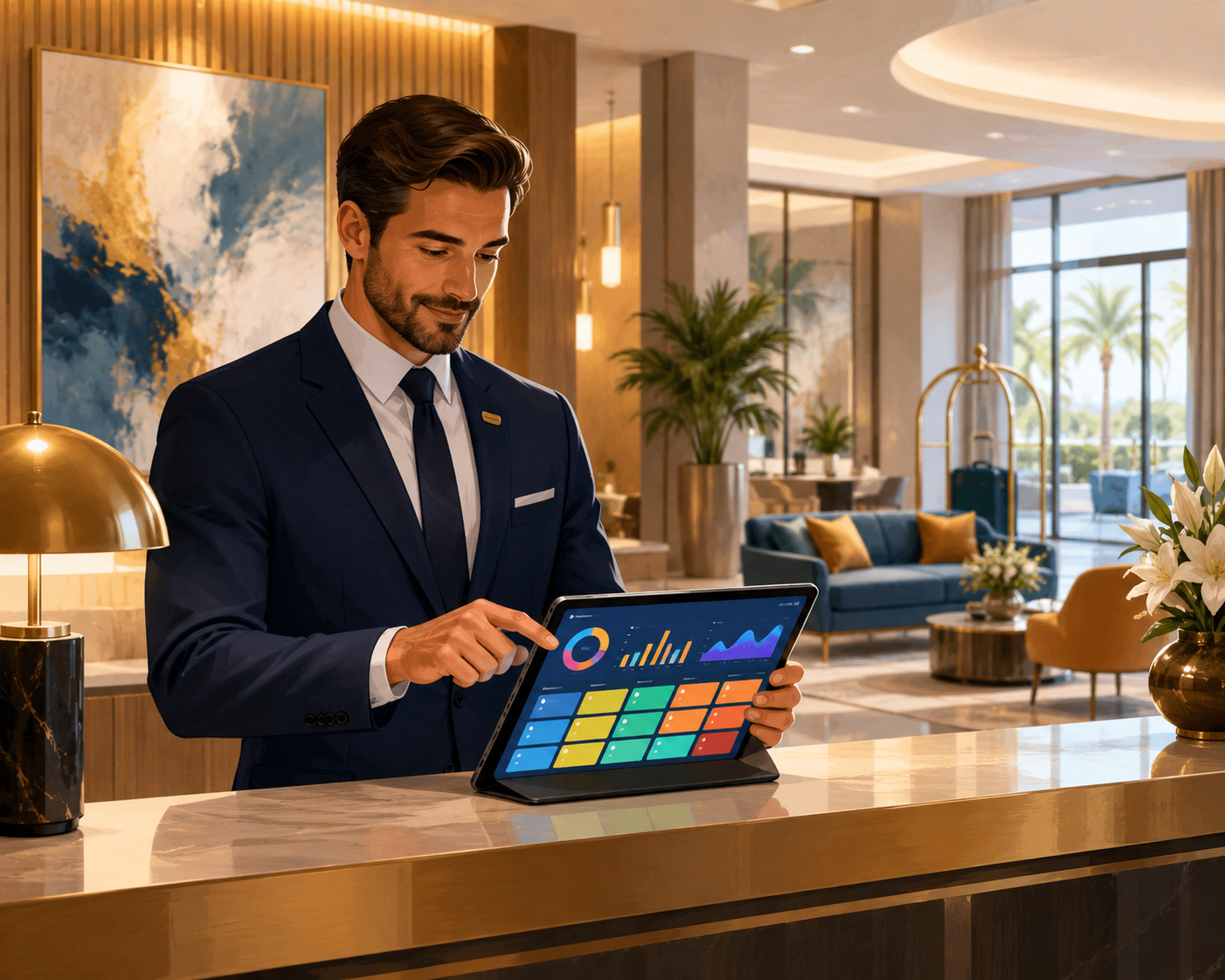
A detailed guide and checklist for choosing the right hotel software to help optimize operations, increase revenue, and avoid budget-wasting mistakes for your business.
Why is choosing hotel software important? In the digital age, managing a hotel with manual logbooks or scattered Excel files is no longer effective. To optimize operational processes, enhance customer experience, and increase revenue, applying technology is a must. However, the market currently offers hundreds of different solutions. Choosing the right hotel software not only helps you save costs but also serves as a launchpad for your business to break through. Conversely, choosing the wrong software can lead to wasted budget, operational disruptions, and reduced service quality.
7-Step Checklist to Choose the Most Suitable Hotel Software
To help you make the right decision, here is a detailed step-by-step checklist to evaluate and choose the most optimal hotel software for your lodging property.
1. Clearly define hotel needs and scale
Each type of accommodation (homestay, motel, 1-3 star hotel, 5-star resort) has its own operational characteristics. You need to clearly determine the room scale, number of staff, and accompanying services (such as restaurants, spas, tours) to find software with compatible capacity and features.
2. Evaluate core features
A standard Property Management System (PMS) needs to meet the following basic features:
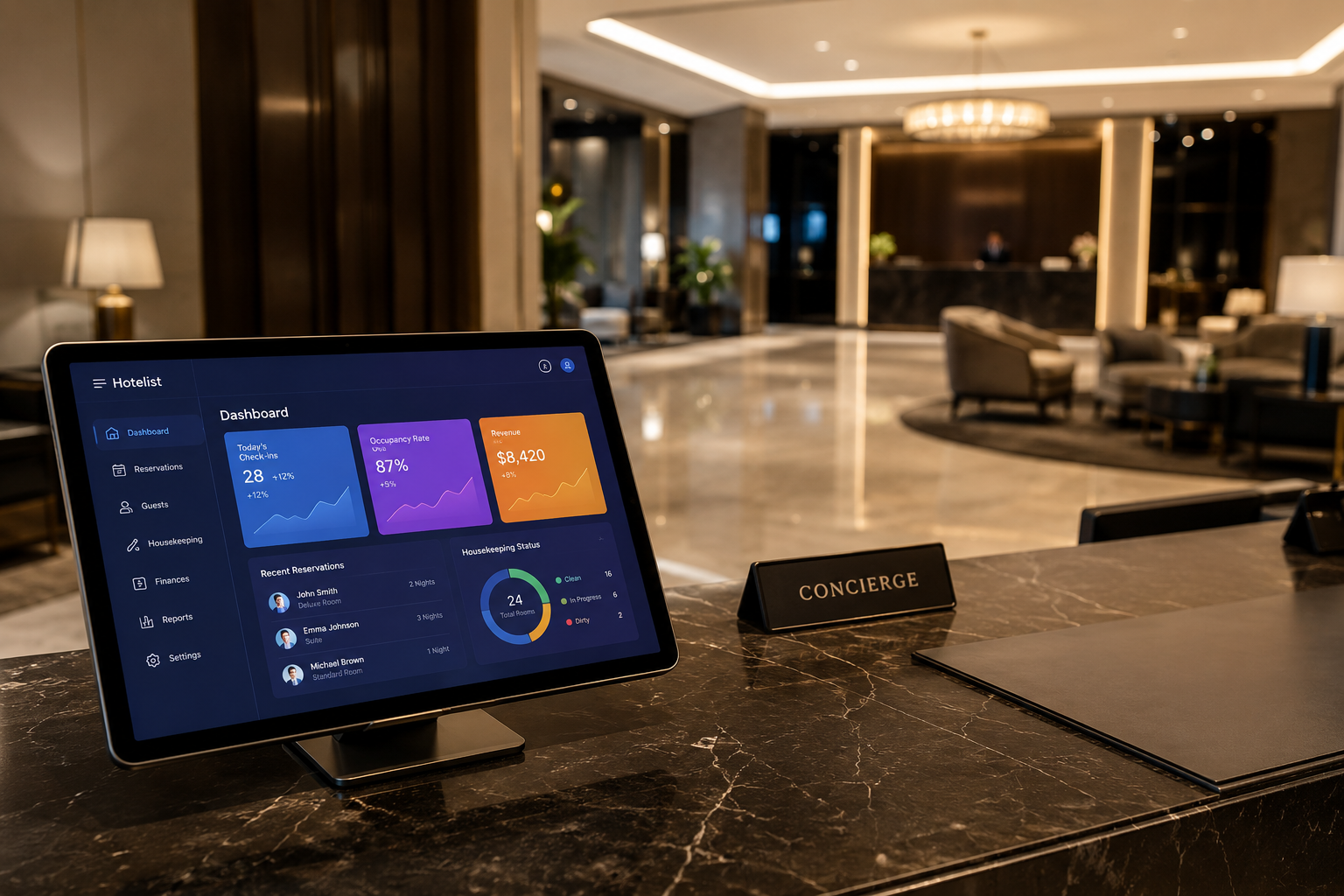
- Room Plan Management: Visually display room status (vacant, occupied, dirty, clean, under maintenance) in real-time.
- Booking Management: Quick check-in and check-out operations, storing detailed customer information.
- Revenue, Expenditure, and Invoice Management: Automatically calculate room rates, accompanying services, print accurate invoices, and minimize financial loss.
- Reporting System: Provide visual reports on revenue, room occupancy, and staff performance in the form of charts.
3. Connectivity and multi-channel integration (Channel Manager)
If your hotel sells rooms on OTA channels (such as Agoda, Booking.com, Expedia...) or social networks, prioritize choosing hotel software integrated with a channel management system (Channel Manager). This feature helps automatically synchronize room availability and rates across all channels, extremely effectively avoiding overbooking.
4. Intuitive, easy-to-use interface
Hotel staff often work in shifts and have different levels of tech-savviness. Software with a complex interface will take a lot of training time and is prone to errors during operation. Choose software with a minimalist, localized design that supports smooth usage on both mobile phones and tablets.
5. Cloud-based technology and security
Cloud-based software allows hotel owners to manage remotely anytime, anywhere with just an internet-connected device. At the same time, ensure the provider guarantees absolute customer data security using modern encryption protocols.
6. After-sales technical support service (24/7 Support)
The hospitality industry operates continuously 24/7, including holidays. Therefore, software issues can occur at any time. When choosing hotel software, pay special attention to the provider's support policy. Are they ready to provide 24/7 technical support via hotline, chatbox, or UltraViewer?
7. Cost and trial policy
Carefully consider the cost structure: One-time purchase fee or monthly/annual subscription fee? Are there any setup, upgrade, or technical support fees? In particular, prioritize providers that offer a 7 to 14-day free trial for hands-on experience before making a financial commitment.
Comparison table of criteria when choosing hotel software
Below is a summary table to help you easily compare important criteria across hotel segments:
Criteria | Small Hotels / Homestays | Medium & Large Hotels (3-5 stars)
Deployment Model | Cloud-based to save operating costs. | Hybrid or Cloud-based with high customization and strict security.
Essential Features | Room management, quick check-in/out, basic reporting. | Multi-branch management, ERP integration, keycards, restaurant POS, Spa.
OTA Integration | Necessary if selling rooms on 2-3 OTA channels. | Mandatory to have a Channel Manager connecting dozens of global channels.
Optimal Budget | Low cost, paid monthly/annually. | Large investment budget, requiring clear SLA commitments.
Common mistakes when choosing hotel software
- Only focusing on cheap prices: Overly cheap software often comes with a lack of features, outdated interfaces, or poor support services, causing greater damage in the long run.
- Buying software with too many redundant features: Choosing software that is too complex for a small homestay only confuses staff and wastes budget.
- Ignoring information security: Customer data leaks can completely ruin a hotel's reputation with guests.
Frequently Asked Questions (FAQ) when choosing hotel software
Should I choose offline or online (cloud-based) hotel software?
Currently, the trend of using online (cloud-based) software is absolutely dominant thanks to its flexibility, remote management capability, automatic updates of new features, and no physical server investment costs. Offline software is only suitable for extremely large hotels with very strong internal network infrastructure and dedicated IT teams.
Does a small hotel with under 15 rooms need to use software?
Absolutely. Even on a small scale, using software helps you professionalize services, avoid room mix-ups, manage revenue accurately, and save time to focus on better customer care.
How do I know if the software is easy to use?
The best way is to ask the provider for a trial (demo) account. Let the receptionists—the ones who operate it daily—try it out directly. If they can get used to it and use it proficiently within 1-2 days, it has a good interface.
Conclusion
Choosing the right hotel software is a strategic decision that directly affects your business efficiency. Stick to the checklist above, carefully weigh your actual needs against your budget to find the most effective "tech assistant." Wishing your hotel always crowded with guests and running smoothly!