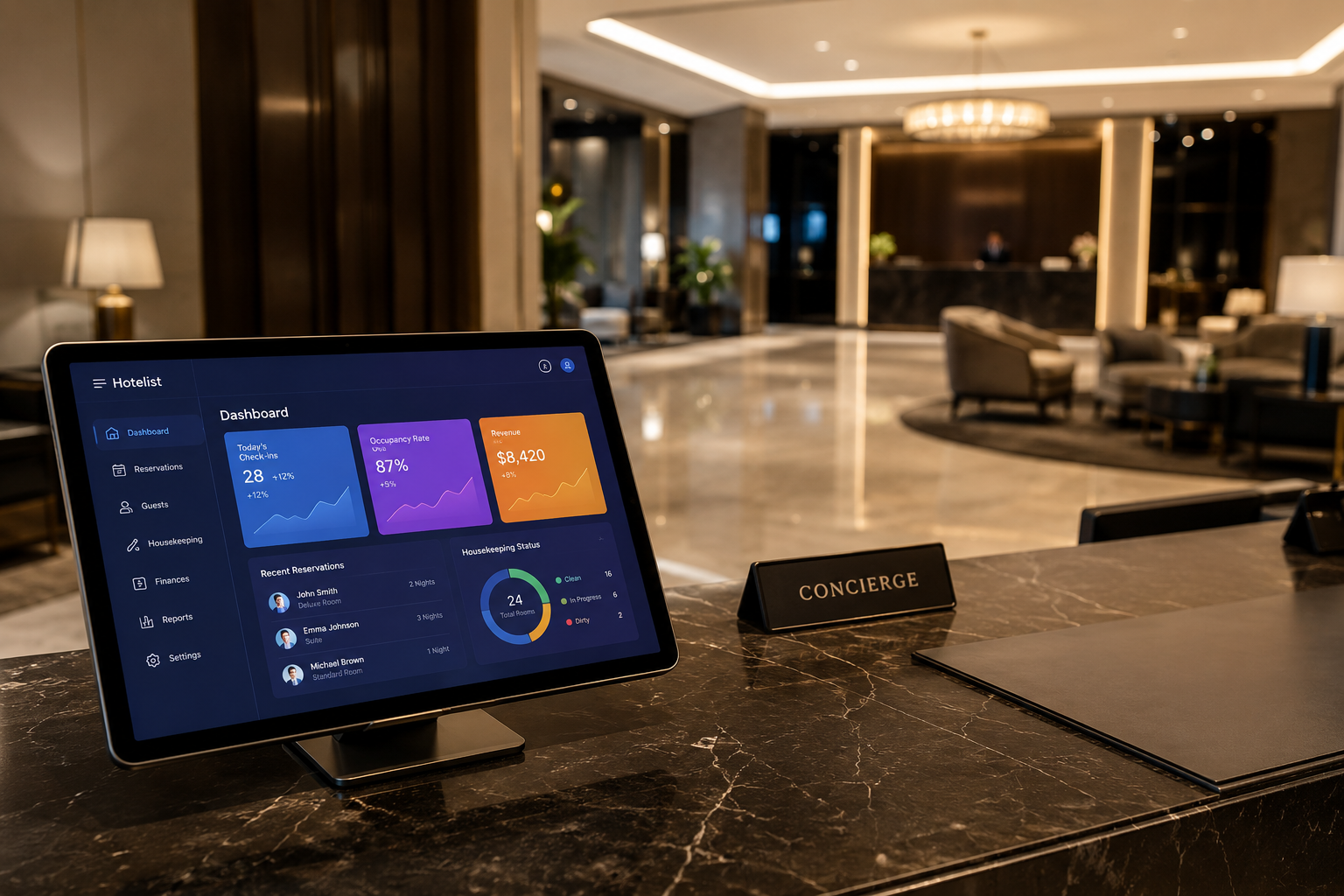



Introducción a la importancia de los informes hoteleros en el PMS
En la era de la digitalización del sector del alojamiento, la gestión de un hotel ya no se limita a recibir a los huéspedes y limpiar las habitaciones de forma manual. Para tomar decisiones comerciales estratégicas y precisas, los gerentes deben basarse en datos reales, visuales y actualizados continuamente. Aquí es donde el sistema de informes hoteleros del software de gestión hotelera (Hotel PMS) desempeña su papel fundamental.
Un software PMS moderno no es solo una herramienta de apoyo para el check-in/check-out, sino también un tesoro de datos invaluables. Este sistema recopila, analiza y genera automáticamente gráficos y tablas detallados sobre todos los aspectos de las operaciones del hotel. Comprender y aprovechar al máximo estos informes ayudará a las empresas a optimizar los procesos operativos, reducir costos e impulsar fuertemente los ingresos.
¿Por qué son importantes los informes hoteleros en el PMS?
Los datos son la clave de oro para optimizar los ingresos y mejorar la competitividad. El uso de los informes hoteleros generados por el sistema PMS aporta múltiples beneficios sobresalientes a los gerentes:
- Toma de decisiones basada en datos reales: Elimina por completo las conjeturas intuitivas. Todas las estrategias de tarifas de habitaciones, promociones o planes de personal se basan en datos históricos y pronósticos reales.
- Monitoreo del rendimiento en tiempo real (Real-time): Ayuda a los gerentes a comprender la situación del negocio de inmediato, desde la ocupación de las habitaciones y los ingresos del día hasta el rendimiento de cada departamento.
- Optimización de campañas de marketing y ventas: Conozca exactamente de dónde provienen los clientes (canales OTA, reservas directas, agencias de viajes) para asignar el presupuesto de marketing de la manera más eficiente.
Los tipos de informes hoteleros más importantes en un Hotel PMS
Un software PMS estándar proporcionará docenas de informes diferentes. Sin embargo, para gestionar de manera eficiente sin abrumarse con un mar de información, aquí están los 5 tipos de informes hoteleros más importantes que debe seguir de cerca diaria y semanalmente:
1. Informe de ocupación (Occupancy Report)
El informe de ocupación muestra el porcentaje de habitaciones vendidas en comparación con el número total de habitaciones disponibles del hotel en un período de tiempo determinado. Esta métrica le ayuda a evaluar el atractivo del hotel y la demanda del mercado.
Si la ocupación de las habitaciones es demasiado baja, es una señal de que necesita revisar su estrategia de precios o impulsar programas de promoción y estímulo de la demanda. Por el contrario, si la ocupación de las habitaciones alcanza constantemente el máximo pero los ingresos no crecen proporcionalmente, es posible que esté vendiendo habitaciones a un precio demasiado bajo en comparación con el mercado.
2. Informes de ingresos y métricas financieras (Revenue & Financial Reports)
Este es el grupo principal de informes para evaluar la salud financiera del hotel. Este informe no solo muestra los ingresos totales generales, sino que también analiza en profundidad los indicadores clave de rendimiento (KPI) específicos de la industria hotelera:
| Indicador | Significado | Cálculo |
|---|---|---|
| ADR (Average Daily Rate) | Tarifa promedio diaria que los huéspedes pagan por una habitación. | Ingresos por habitaciones / Habitaciones vendidas |
| RevPAR (Revenue Per Available Room) | Ingresos por habitación disponible (mide la eficiencia comercial general). | Ingresos por habitaciones / Total de habitaciones disponibles (o ADR x Ocupación) |
| RevPASH (Revenue Per Available Seat Hour) | Ingresos por asiento disponible por hora (aplicado a restaurantes y bares de hoteles). | Ingresos totales de F&B / (Número de asientos x Horas de apertura) |
3. Informe de previsión (Forecasting Report)
El informe de previsión utiliza datos históricos combinados con las reservas actuales para realizar predicciones sobre la ocupación de habitaciones y los ingresos en el futuro (la próxima semana, el próximo mes o el próximo trimestre). Este informe es sumamente importante para la planificación operativa:
- Planificación de personal: Aumentar el personal en los días con previsión de alta ocupación y reducir el personal en temporada baja para ahorrar costos.
- Gestión de ingresos (Revenue Management): Aplicar una estrategia de precios dinámicos (Dynamic Pricing). Aumentar las tarifas de las habitaciones cuando se prevé una alta demanda y reducir los precios con ofertas cuando la demanda es baja.
- Gestión de la cadena de suministro: Ayuda al departamento de F&B y compras a preparar la cantidad justa de materias primas y artículos de cortesía (amenities), evitando el desperdicio.
4. Informe del estado de las habitaciones (Housekeeping Report)
Para garantizar que la experiencia del cliente sea siempre perfecta, la coordinación entre el departamento de recepción y el departamento de pisos debe ser extremadamente fluida. El informe de habitaciones proporciona información en tiempo real sobre el estado de cada habitación: habitación limpia, habitación sucia, habitación fuera de servicio (Out of Order), habitación ocupada (Occupied)...
Gracias al informe del hotel sobre las habitaciones, el personal de recepción puede saber exactamente qué habitación está lista para realizar el check-in de los huéspedes de inmediato, minimizando el tiempo de espera del cliente y mejorando la calidad del servicio.
5. Informe de canales de distribución (Distribution Channel Report)
Su hotel puede estar vendiendo habitaciones a través de muchos canales diferentes: canales OTA (Booking.com, Agoda, Expedia), agencias de viajes (TA), clientes corporativos (Corporate), reservas directas a través de la página web/Fanpage o clientes sin reserva (Walk-in).
El informe de canales de distribución le ayuda a identificar claramente qué canal genera la mayor cantidad de reservas y cuál genera los mayores ingresos reales después de deducir las comisiones. A partir de ahí, puede desarrollar una estrategia de asignación de habitaciones y ajustar las políticas de precios para cada canal con el fin de optimizar los beneficios.
Cómo aprovechar eficazmente los informes del hotel para aumentar los ingresos
Poseer datos es una ventaja, pero saber cómo leerlos y transformarlos en acciones reales es el factor decisivo para el éxito. A continuación, se presentan algunos consejos para los gestores hoteleros:
- Establecer una frecuencia de revisión periódica: Adquiera el hábito de revisar los informes diarios de ocupación e ingresos; los informes semanales de canales de distribución y pronósticos; y los informes financieros generales al final de cada mes.
- Combinar múltiples dimensiones de indicadores: No se limite a mirar una sola métrica. Un hotel con una ocupación del 90% pero un ADR bajo puede generar menos ingresos totales que un hotel con una ocupación del 70% pero un ADR alto. Combine siempre la ocupación y el ADR para optimizar el RevPAR.
- Automatizar el proceso de informes: Aproveche las funciones de automatización de los softwares PMS modernos. Puede configurar el sistema para que envíe automáticamente informes importantes por correo electrónico o aplicaciones móviles al equipo de gestión a una hora fija todos los días.
Preguntas frecuentes (FAQ) sobre informes hoteleros
¿Cuál es la frecuencia adecuada para revisar los informes hoteleros?
Para el nivel de gestión operativa directa (Recepción, Limpieza de habitaciones), el informe del estado de las habitaciones debe actualizarse continuamente minuto a minuto. Para la alta dirección y los inversores, los informes de ingresos y ocupación deben revisarse diariamente, mientras que los informes de análisis profundo y pronósticos deben evaluarse periódicamente de forma semanal o mensual.
¿Cuál es el indicador más importante en el informe de ingresos hoteleros?
El RevPAR (Revenue Per Available Room) se considera el indicador más importante porque refleja simultáneamente tanto la ocupación (Occupancy) como la tarifa diaria promedio (ADR). Sin embargo, para evaluar la rentabilidad real después de deducir los costos operativos, el GOPPAR (Gross Operating Profit Per Available Room) es la métrica más completa.
¿Puede el software PMS generar informes hoteleros de forma automática?
Sí. La mayoría de los sistemas PMS modernos de hoy en día admiten la función de automatización de informes. Puede configurar fácilmente el sistema para que envíe automáticamente los informes importantes a su correo electrónico o al de los accionistas según un cronograma fijo (diario, semanal, mensual) sin tener que realizar la exportación de forma manual.
Conclusión
El sistema de informes hoteleros en el PMS es la brújula que guía todas las actividades comerciales del hotel. Comprender y saber cómo analizar estos indicadores ayudará a su empresa a mantenerse siempre proactiva ante las fluctuaciones del mercado, optimizar los costos operativos y aumentar constantemente los ingresos. ¡Invierta en un software PMS potente para obtener los informes más visuales y precisos hoy mismo!