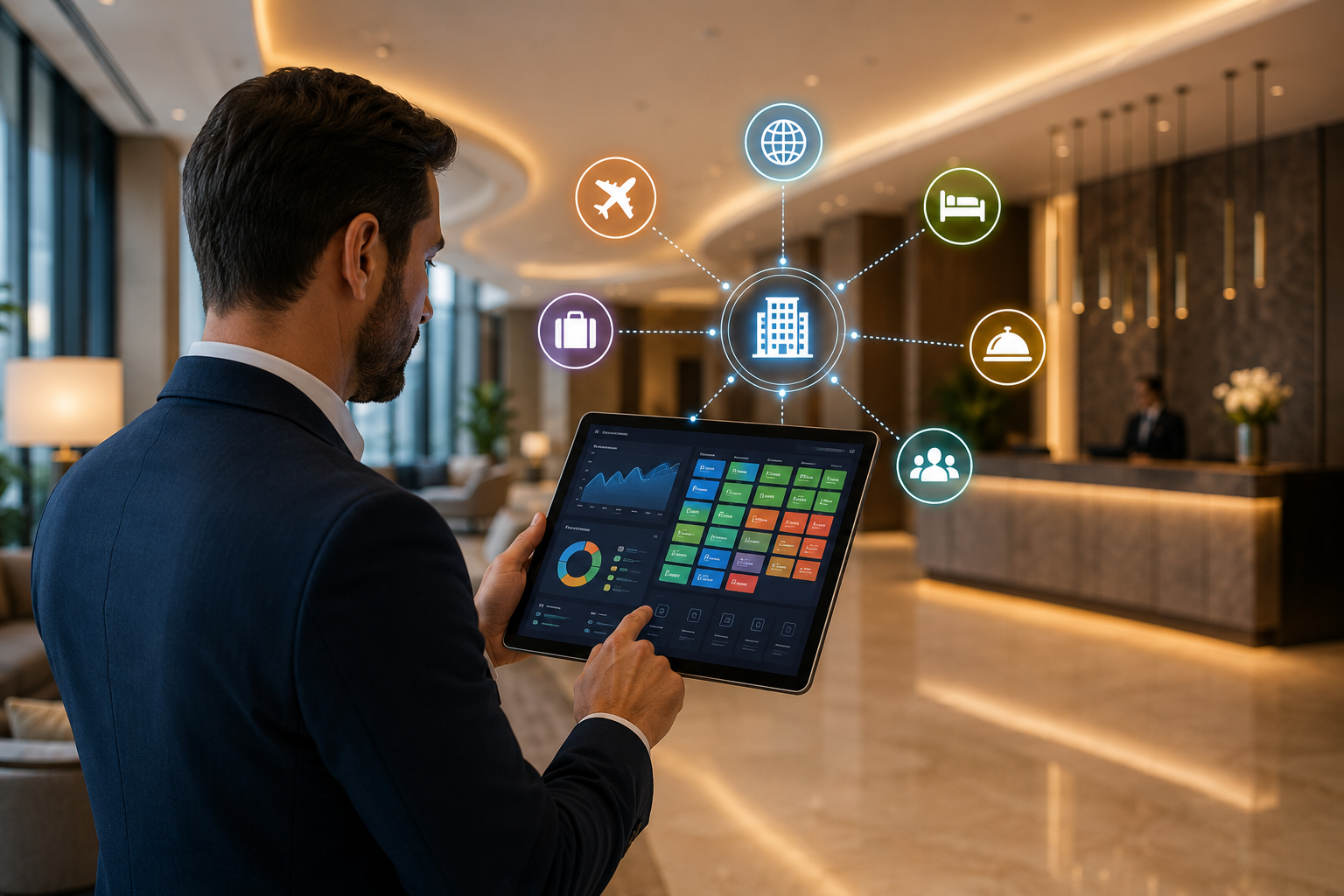


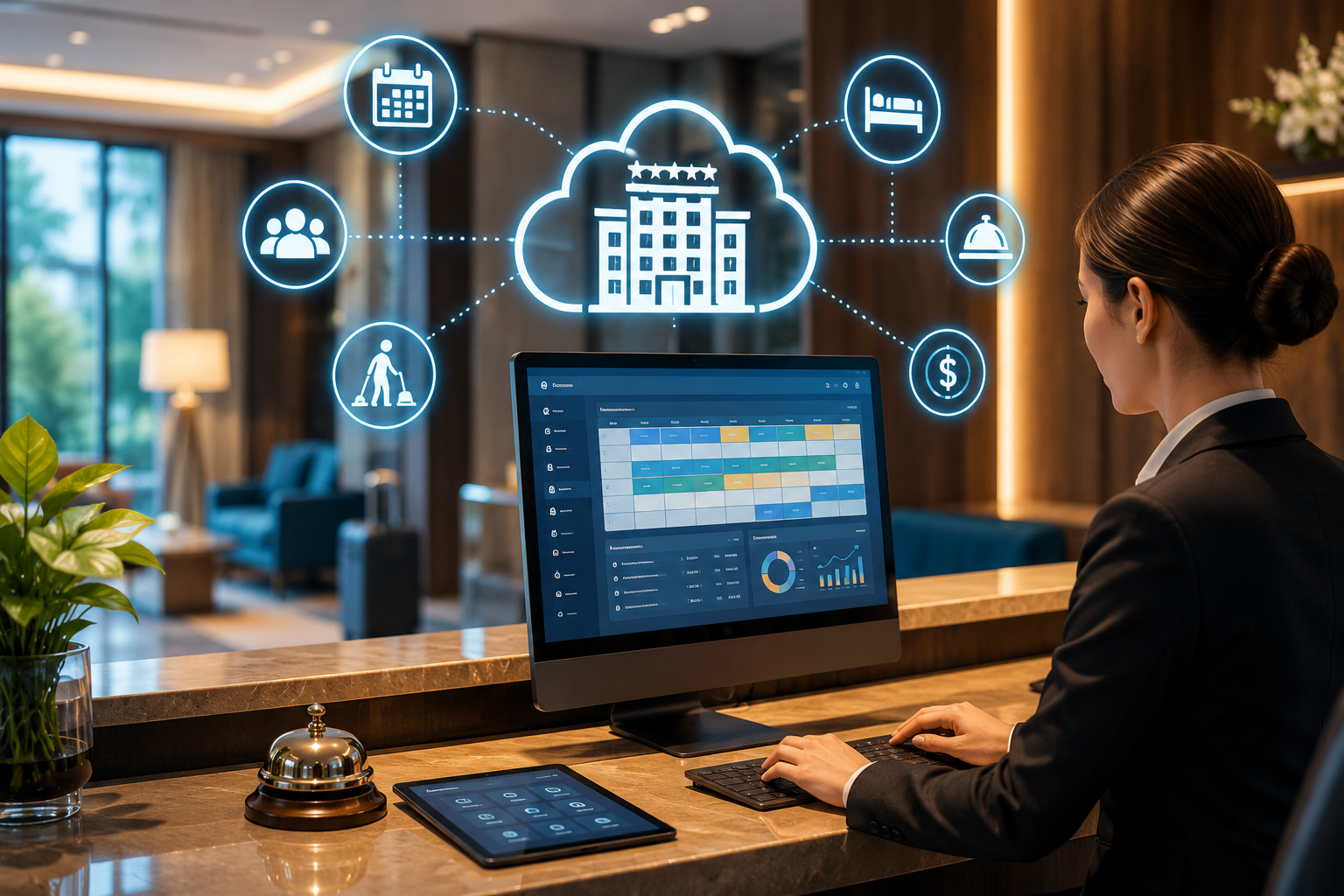
En la era de la digitalización del sector turístico, la gestión de un establecimiento de alojamiento ya no consiste simplemente en llevar registros manuales o utilizar hojas de cálculo de Excel aisladas. Hotel PMS (Property Management System) ha surgido como una solución tecnológica esencial, actuando como el cerebro central que coordina todas las operaciones. Entonces, ¿específicamente cómo funciona un PMS y por qué es tan importante? Conozcamos los detalles en el siguiente artículo.
¿Qué es un Hotel PMS?
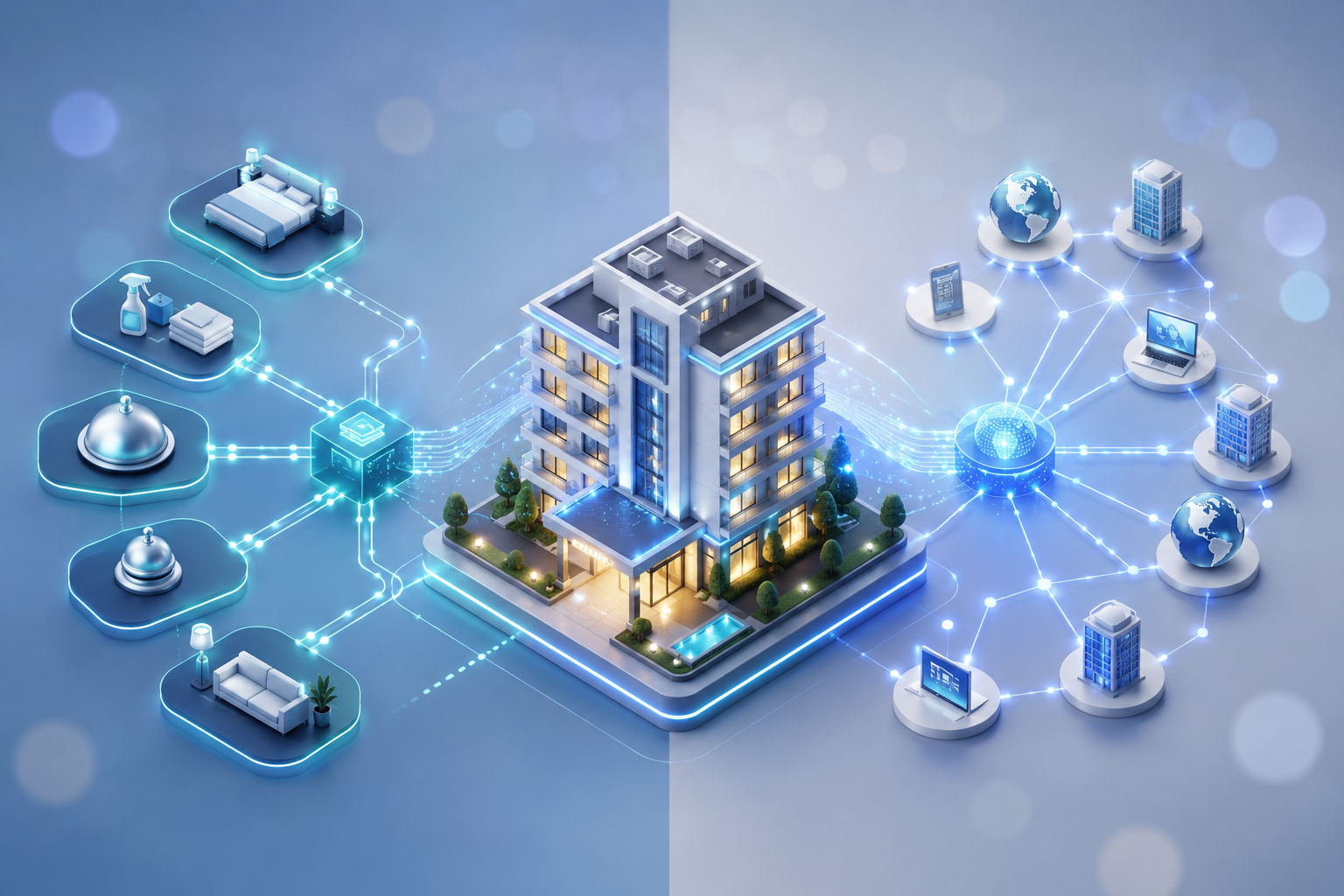
Hotel PMS, o software de gestión hotelera, es una plataforma de software centralizada diseñada para ayudar a los propietarios y al personal del hotel a gestionar y automatizar las operaciones diarias. Desde la gestión de reservas, el check-in/check-out hasta la gestión de limpieza, la contabilidad y los informes de ingresos, todo está integrado en un único sistema.
Anteriormente, los PMS se instalaban principalmente en servidores locales (On-premise). Sin embargo, la tendencia actual se está desplazando con fuerza hacia soluciones de computación en la nube como SCO Hotel PMS o Cloudbeds, que permiten el acceso a los datos en cualquier momento y lugar con solo una conexión a internet.
Cómo funciona un Hotel PMS en la práctica
Para entender claramente cómo funciona un PMS, debemos analizar el proceso de interacción desde el momento en que el cliente busca una habitación hasta que abandona el hotel:
1. Recepción y gestión de reservas (Booking Management)
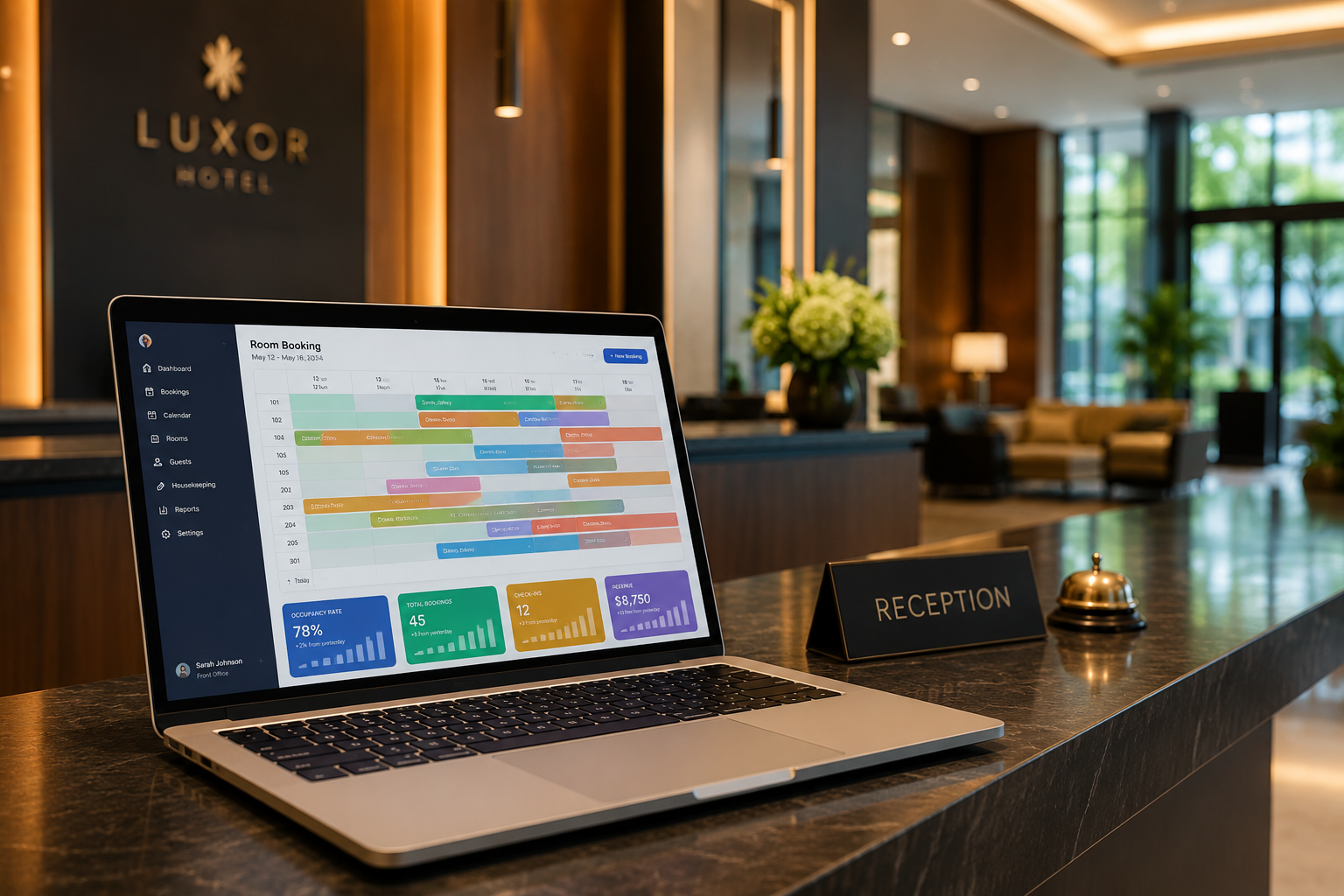
El proceso comienza cuando el cliente realiza una reserva a través del sitio web del hotel, agencias de viajes en línea (OTA) como Booking.com, Agoda, o mediante una llamada telefónica directa. En este punto, el Hotel PMS desempeña un papel central:
- Sincronización de datos: El sistema actualiza automáticamente la disponibilidad de habitaciones en todos los canales de venta para evitar el overbooking.
- Automatización de tarifas: Basándose en configuraciones preestablecidas, el PMS puede ajustar los precios de manera flexible según la temporada o la demanda del mercado.
2. Proceso de Check-in y experiencia de estancia
Cuando el huésped llega al hotel, el recepcionista solo necesita realizar unas pocas operaciones en el software de gestión hotelera para completar el proceso de entrada. El sistema:
- Registra la información de identificación del huésped.
- Activa la tarjeta magnética para abrir la habitación (si hay integración con cerraduras electrónicas).
- Registra las peticiones especiales del huésped en su perfil electrónico.
Durante toda la estancia, todos los gastos incurridos, como servicios de restauración, lavandería o uso del minibar, se actualizarán directamente en la cuenta de la habitación del huésped en el PMS, garantizando una precisión absoluta al momento del pago.
3. Gestión de limpieza y mantenimiento
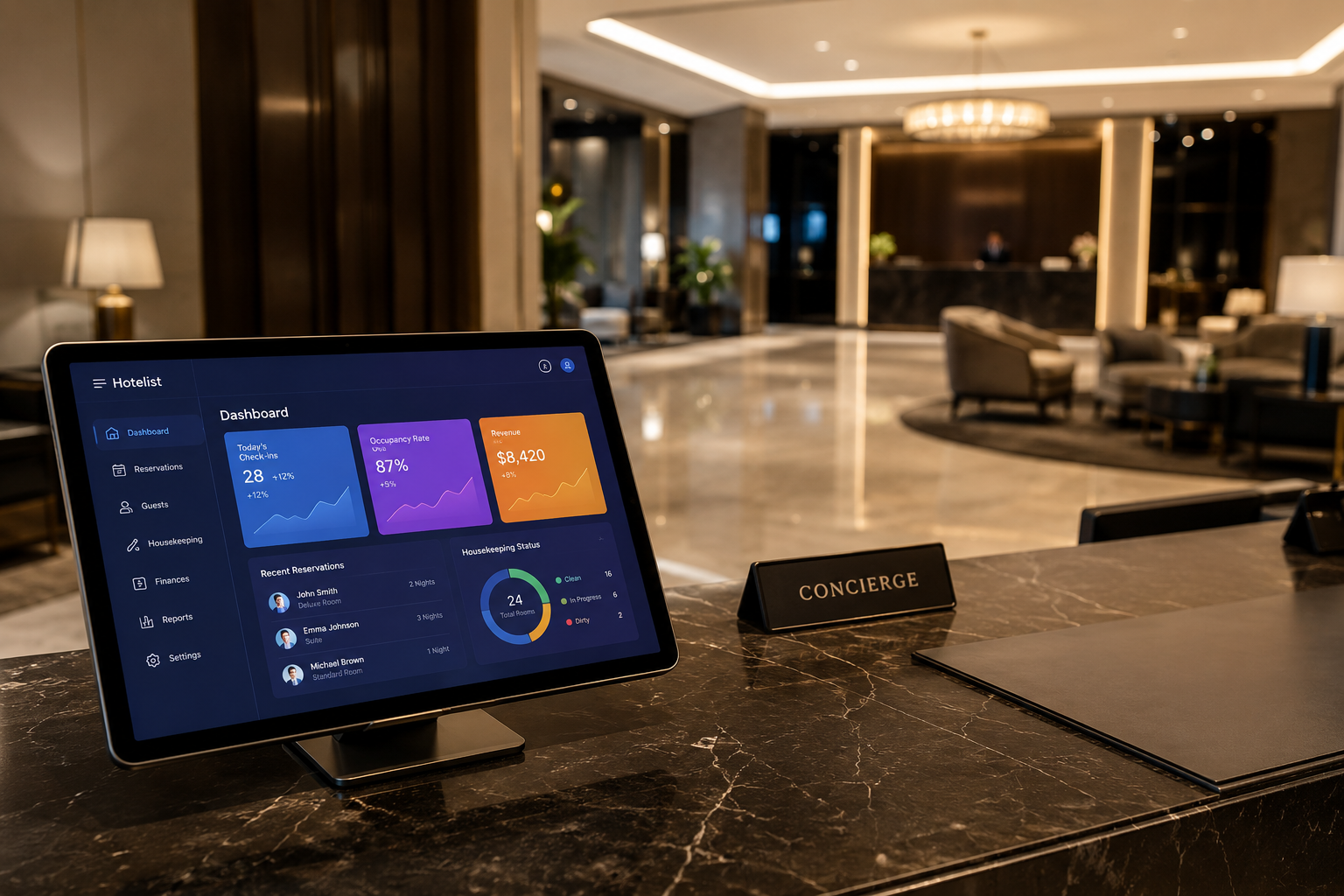
El PMS de hotel no es solo para la recepción. El departamento de limpieza utilizará el sistema para actualizar el estado de las habitaciones (Limpia, Sucia, En limpieza) en tiempo real. Cuando se termina de limpiar una habitación, el estado en la pantalla de recepción cambiará inmediatamente a color verde, lista para recibir a un nuevo huésped.
4. Pago e informes (Check-out & Reporting)
Al momento de la salida, el PMS consolidará automáticamente todos los cargos y emitirá la factura en solo unos segundos. Después de que el huésped se retire, el sistema almacenará los datos del cliente (CRM) para futuras campañas de marketing. Al mismo tiempo, los informes de ingresos y ocupación se extraerán automáticamente, ayudando a los gerentes a tomar decisiones comerciales precisas.
Beneficios excepcionales al utilizar un PMS de hotel
Comprender claramente cómo funciona un PMS ayuda a los dueños de negocios a ver los grandes beneficios:
- Aumento de la eficiencia operativa: Elimina tareas manuales repetitivas y minimiza los errores humanos.
- Optimización de ingresos: Gracias a la función de automatización de tarifas de habitaciones y la gestión inteligente de canales de distribución.
- Mejora de la experiencia del cliente: Los procesos de servicio rápidos y profesionales ayudan a aumentar la tasa de retorno de los huéspedes.
En resumen, un software de gestión hotelera moderno no es solo una herramienta de almacenamiento, sino un ecosistema que conecta todos los departamentos. Invertir en un sistema PMS adecuado es un paso estratégico para elevar el posicionamiento del hotel en el mercado altamente competitivo de hoy.